
The Spend Mirror: Where Your AI Budget Really Goes
Oct 21, 2026
The AI budget is approved. It fits on one slide: licences, a vendor platform, a line for integration. Everyone nods, because every number on that slide has an invoice behind it. Nobody asks where the training hours are, who will redesign the approval process, or who answers questions in month three. Those costs are real. They just do not appear on any slide. This post gives you a one-page worksheet for AI budget allocation that makes the invisible lines visible before the money is spent.
The short answer Technology costs show up as invoices, so they get budgeted. People and process costs show up as time, so they are often missed. The Spend Mirror lists every AI cost, tags it to one side, and lets you compare the split with the work that has to happen. One rule of thumb to test is roughly 65 percent people and process, 35 percent technology.
Why a finished-looking AI budget is often half a budget
Look at a typical AI proposal. Licences, tools, perhaps a consultant. The total is clean, the vendor quotes are attached, and finance can tick every line.
Now ask a different question: what has to change for anyone to get value from those tools? Someone has to decide which workflows change. Someone has to teach people how to work with the output and how to check it. Someone has to tidy the data the tools will read. Someone has to be around when the first version disappoints.
None of that is a purchase. It is work, done by people you already employ, and it rarely carries a code on a ledger.
In the meeting, the conversation stays on vendors and price per seat. It is the easiest conversation to have, because the facts are on the table. The harder one, about who will change what on Monday morning, has no document to anchor it, so it quietly does not happen.
A budget that funds only the visible half is not wrong so much as unfinished. The tools arrive on time. The change does not.
Technology has invoices, people have calendars
The imbalance is structural, not careless. A licence has a price, a start date and a supplier who will chase you. Training time has none of those. It lives in calendars: two hours here, a half day there, a manager pulled away from the team to sit in a workshop.
Because those hours are absorbed into existing salaries, they feel free. They are not. They are simply unbudgeted, which means they compete with everyone's day job and usually lose.
A practitioner rule of thumb associated with Sol Rashidi puts successful programmes at roughly 65 percent people and process and 35 percent technology. Treat that as a hypothesis to test against your own programme, not as research. We are not offering it as a finding. The useful question is simpler: does your own split look anything like it, and if not, can you explain why?
You cannot answer that until the people side is written down. That is what the Spend Mirror is for.
The Spend Mirror in four steps
The Spend Mirror is a worksheet with one rule: every AI cost goes on exactly one side of a line. Technology on the left. People and Process on the right.
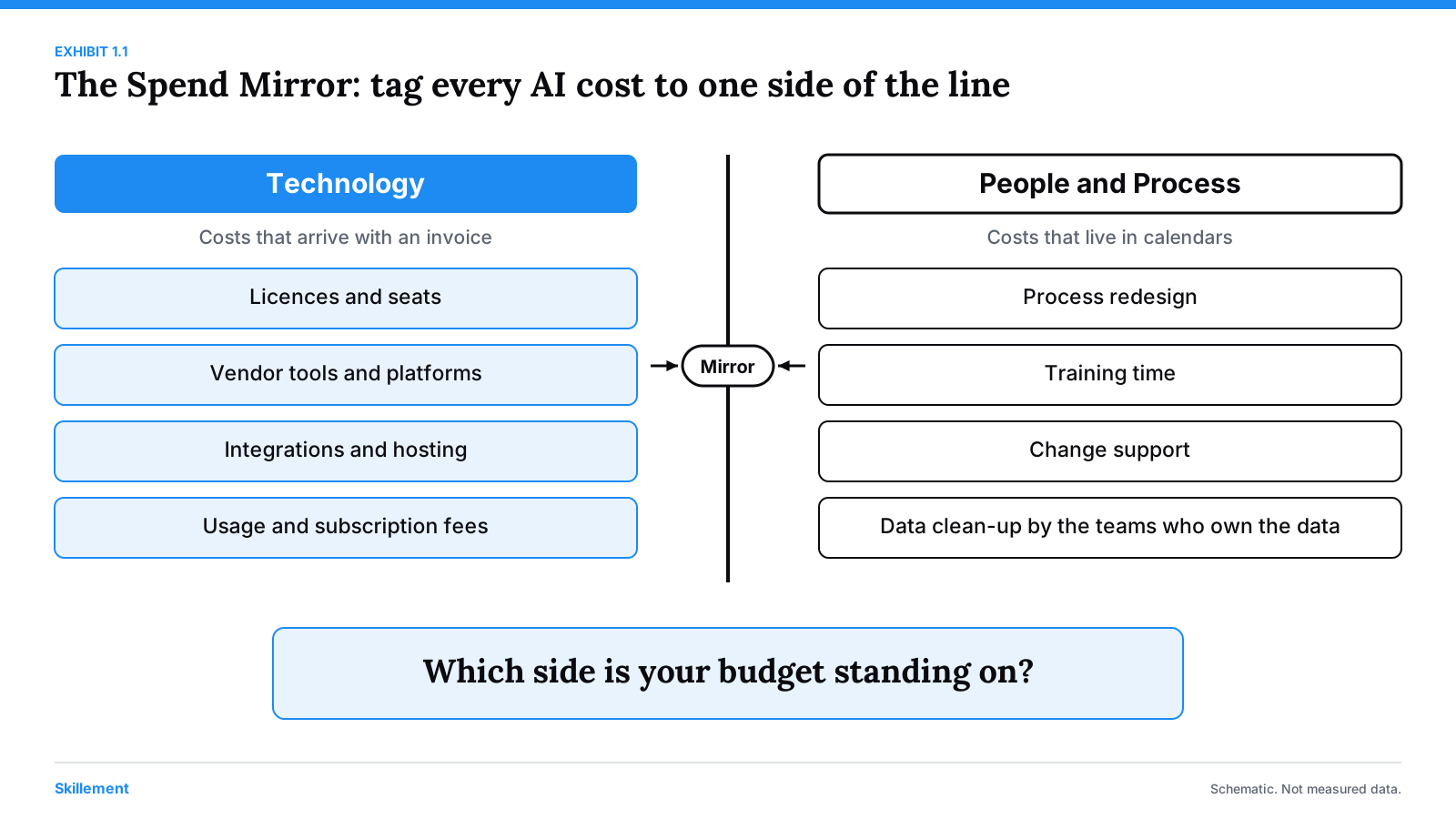
Exhibit 1.1: The Spend Mirror. Costs with invoices sit on the left, costs that live in calendars sit on the right.
Four steps:
- List every cost. Include the unpaid ones: training hours, workshop time, the weeks a team spends fixing its own data. Give each a cost in the same currency as the licences.
- Tag each line. Technology, or People and Process. If a line could go either way, decide, write down why, and move on.
- Name an owner and a confirmer. The owner is accountable for spending it. The confirmer is a different person who agrees the number is real.
- Compare the split with the work. Add each side and set the totals against what must happen for the tools to be used.
Step three matters most. A line with no owner is a line nobody will fund, and the mirror will show you which ones those are.
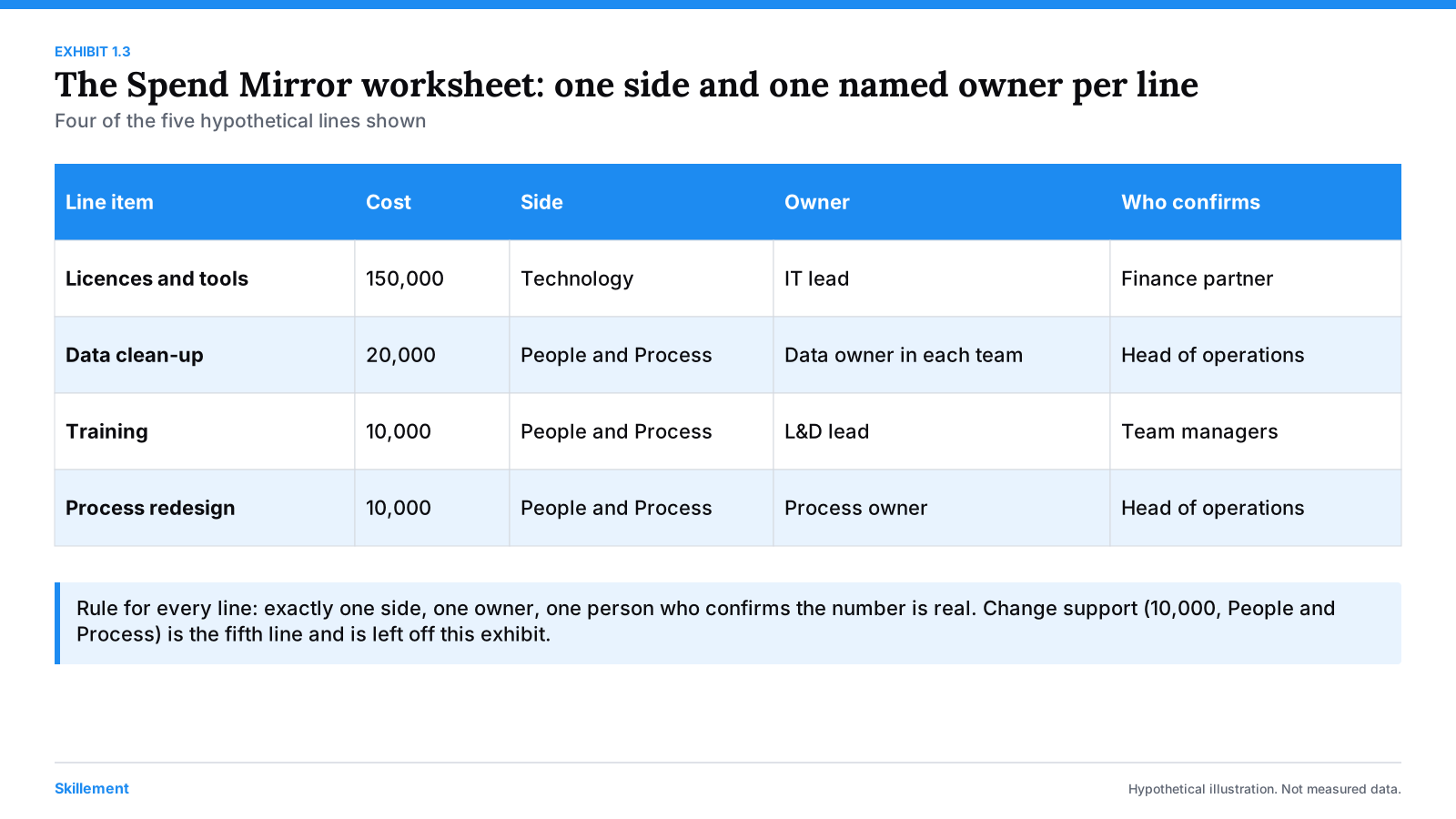
Exhibit 1.3: The worksheet itself. Four of the five hypothetical lines from the worked example are shown.
A worked example with a hypothetical 200,000 budget
The numbers below are hypothetical. They are built to show the arithmetic, not to describe any organisation.
A team plans to spend 200,000 on AI. The first draft looks like this:
- Licences and tools: 150,000
- Data clean-up: 20,000
- Training: 10,000
- Change support: 10,000
- Process redesign: 10,000
Tagging them, licences and tools are Technology. We tag data clean-up as People and Process, because in this example the teams who own the records do the work. That is a judgement call, and writing it down is part of the point.
The sums: Technology is 150,000 out of 200,000, which is 75 percent. People and Process is 50,000, or 25 percent.
Set that against the 35 percent rule of thumb and the gap is plain. Now rebalance without adding a penny. Licences and tools drop to 70,000 by starting with fewer seats and a phased rollout. Data clean-up rises to 30,000, training to 30,000, change support to 30,000 and process redesign to 40,000. People and Process becomes 130,000, which is 65 percent, and Technology is 70,000, or 35 percent.
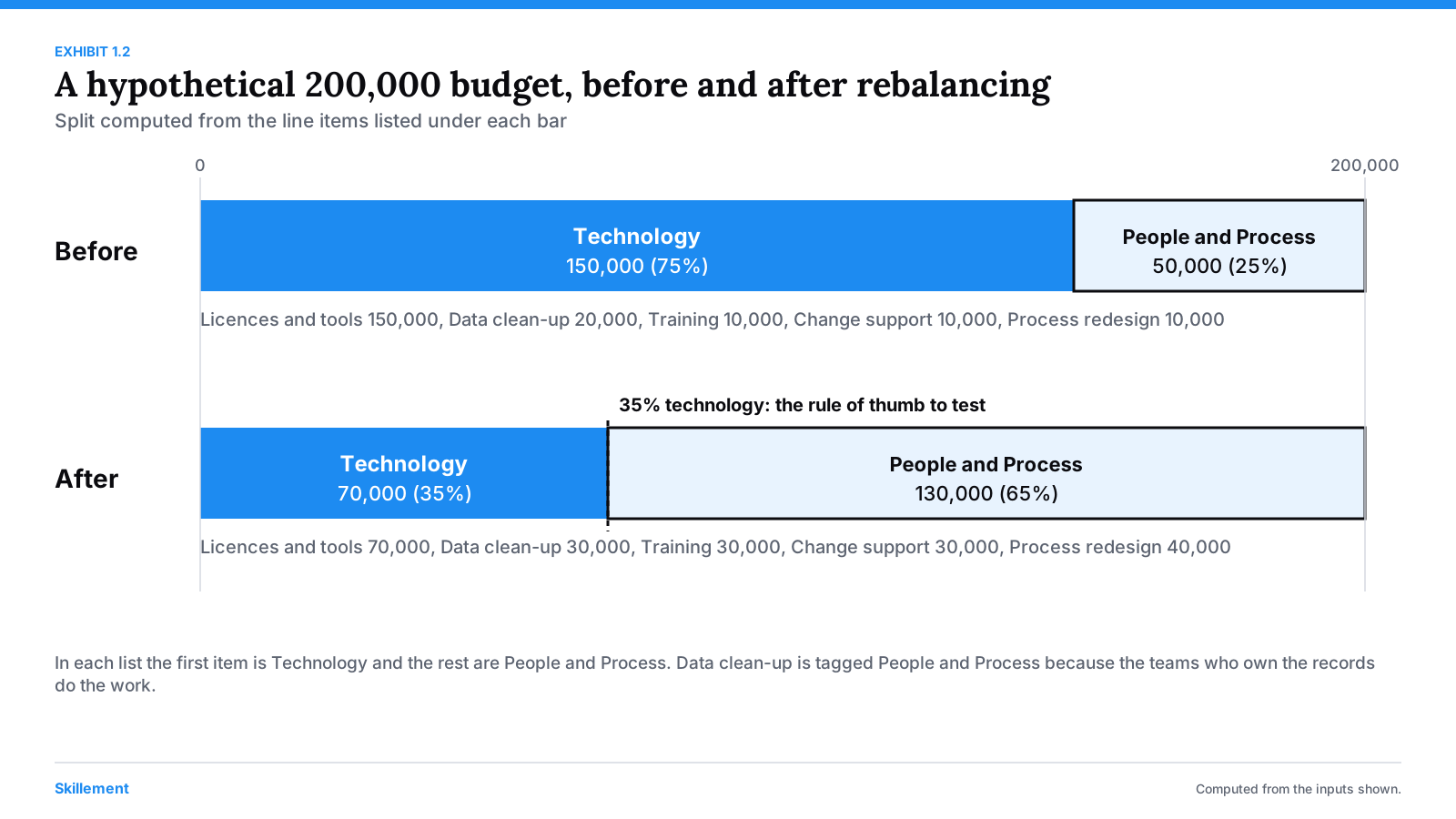
Exhibit 1.2: The same 200,000, before and after rebalancing. The split is computed from the line items shown.
The total has not changed. What has changed is that the work needed for people to use the tools now has money attached.
What to do when the mirror looks lopsided
A lopsided mirror is a prompt, not a verdict. Three moves cover most cases.
Phase the technology. Buy fewer licences first and add more as use grows. This frees money without cancelling anything.
Fund the missing lines. If the technology cost is fixed by a contract, the honest answer may be to ask for more budget, not to move money. Put the gap in front of whoever approves the plan, with the worksheet as evidence.
Check the other direction. If the people side is far heavier than the rule of thumb, ask whether the tools are doing enough of the job. The mirror works both ways.
Organisations that want to tie this to readiness and EBITDA can look at AIVROs. If you want a method for turning a long list of ideas into a funded plan, the free Plan of Six guide is built for that step. Our post on the AI adoption trap looks at why programmes stall after the tools are bought, and what real AI readiness looks like goes beyond the tools.
The objection: the tools are the expensive part
It is a fair objection. Licences, platforms and usage fees are often the biggest single line, and they are not optional.
Two answers. First, the mirror does not ask which line is largest. It asks whether the work that makes the tools useful has been paid for. A 150,000 licence bill delivers little if nobody changes how they work.
Second, even the rebalanced plan keeps 70,000 on technology. That is a real tool budget. It is just no longer the only thing the budget is about.
You may also be right that your own split should differ from the rule of thumb. If so, the mirror still helps, because you can now say why.
What we believe, and one thing to do this week
We believe an AI budget is only finished when the people side is on the page. The tools you buy are not the programme; the changes in how people work are.
This week, take 20 minutes. Open your current AI spend plan, list every line including the unpaid time, and tag each one Technology or People and Process. Then count the lines that have no named owner. That count is your first finding.
Your next step The Plan of Six is a free 29-page practitioner guide that takes you from a long wish list to six funded initiatives, with a value funnel, an opportunity matrix, templates and a worked case. Enter your name and email and it arrives as a PDF in your Skillement library. Get The Plan of Six, a free guide.
Skillement
Published 21 October 2026
Related reading from Skillement - The AI Adoption Trap: Why Companies Fail at AI Transformation, and How to Get It Right
A wider look at why programmes stall once the tools are bought. - The 7 “Don’t Do’s” of AI Implementation
Seven mistakes to avoid once the budget is approved. - Beyond the Hype: What Real AI Readiness Looks Like in 2025 And How to Achieve It
A picture of readiness that goes beyond the tools.
About Skillement
Skillement builds the instruments that make AI readiness measurable. Individuals can take the AI Quotient (AIQ) assessment and build skills through the Skillement Academy. Organisations use AIVROs, an operating system that ties AI readiness, workforce capability and EBITDA into one closed loop. The free Plan of Six guide shows how to move from a long list of AI ideas to six funded initiatives. Where a figure is hypothetical or directional, it is labelled as such.
Further reading is in the Skillement Insights library.
© 2026 Skillement. All rights reserved.
🔷 Check Out Our Great Offering
Skillement.ai helps you stay ahead with practical AI skills, guided learning, and powerful tests.
Stay connected with news and updates!
Join our mailing list to receive the latest news and updates from our team.
Don't worry, your information will not be shared.
We hate SPAM. We will never sell your information, for any reason. Unsubscribe anytime.
